
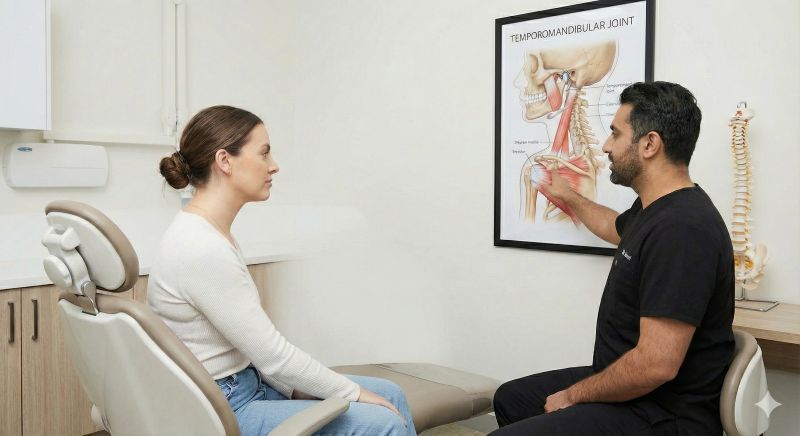
If you’ve ever had jaw pain that seems to turn into a headache, or neck stiffness that somehow leads to a sore jaw, you’re not imagining things. Your temporomandibular joint (TMJ) does more than help you chew and talk. It connects to a chain of muscles, nerves, and structures that affect how your entire upper body functions.
At Indianapolis Dentistry, we take a holistic look at TMJ symptoms, not just as an isolated problem, but as something that can impact posture, balance, and overall comfort.
What is TMJ, exactly?
The TMJ is where your lower jaw (mandible) meets the base of your skull, just in front of each ear. It’s a small, complex joint that moves in multiple directions: up, down, side to side, even slightly forward and back.
Because it’s so active and delicate, it’s also prone to dysfunction. TMJ disorder (or TMD) happens when the joint is misaligned, inflamed, or under too much pressure. That pressure doesn’t stay local, it spreads.
The link between your jaw and posture
Here’s where it gets interesting. Your TMJ is connected to the muscles of your neck, head, shoulders, and even down your spine. If your bite is off, or your jaw is constantly overworked (from clenching, grinding, or misalignment), it can trigger:
- Tension headaches
- Neck and shoulder tightness
- Changes in head position
- Uneven posture or spinal compensation
It’s not just about feeling sore. Your body adjusts to protect you, and sometimes that compensation causes more problems down the line.
Why a holistic view matters
At our Indianapolis dental office, Dr. Ansari looks at TMJ issues through a broader lens. That means we’re not just treating a sore jaw, we’re asking why it’s sore, and what other systems it’s affecting.
We often start with a detailed bite evaluation, muscle palpation, and imaging when needed. From there, treatment might include:
- Custom oral appliances to reduce pressure
- Gentle bite adjustments or orthodontic options
- Collaboration with physical therapists
- At-home support for posture, breathing, or sleep positioning
Our goal? To restore balance, without jumping to aggressive procedures.
What about stress and TMJ?
It’s no secret that stress and jaw pain are linked. Clenching, grinding, and shallow breathing (especially during sleep or screen time) all make TMJ symptoms worse.
That’s why we sometimes recommend therapies like NuCalm relaxation treatment or breathing retraining alongside physical solutions. The body doesn’t operate in pieces. It’s all connected.
When to seek TMJ help
If you’re dealing with jaw clicking, soreness, tension headaches, or a sense that your bite “doesn’t feel right,” it might be time to look deeper. Even if your symptoms seem minor, early care can help prevent bigger problems later.
Want a breakdown of how we evaluate TMJ holistically? Start here: TMJ Care at Indianapolis Dentistry
Let’s look at the full picture
At Indianapolis Dentistry, we believe treating TMJ means treating the whole person. Dr. Ansari and Dr. Quint will walk you through what we see, step by step, so you can make decisions that feel right for your health, not just your teeth.
Got questions? You’re not alone. We’re here to listen, explain, and support, not push treatments. Book a visit when you’re ready.